f.PNG)
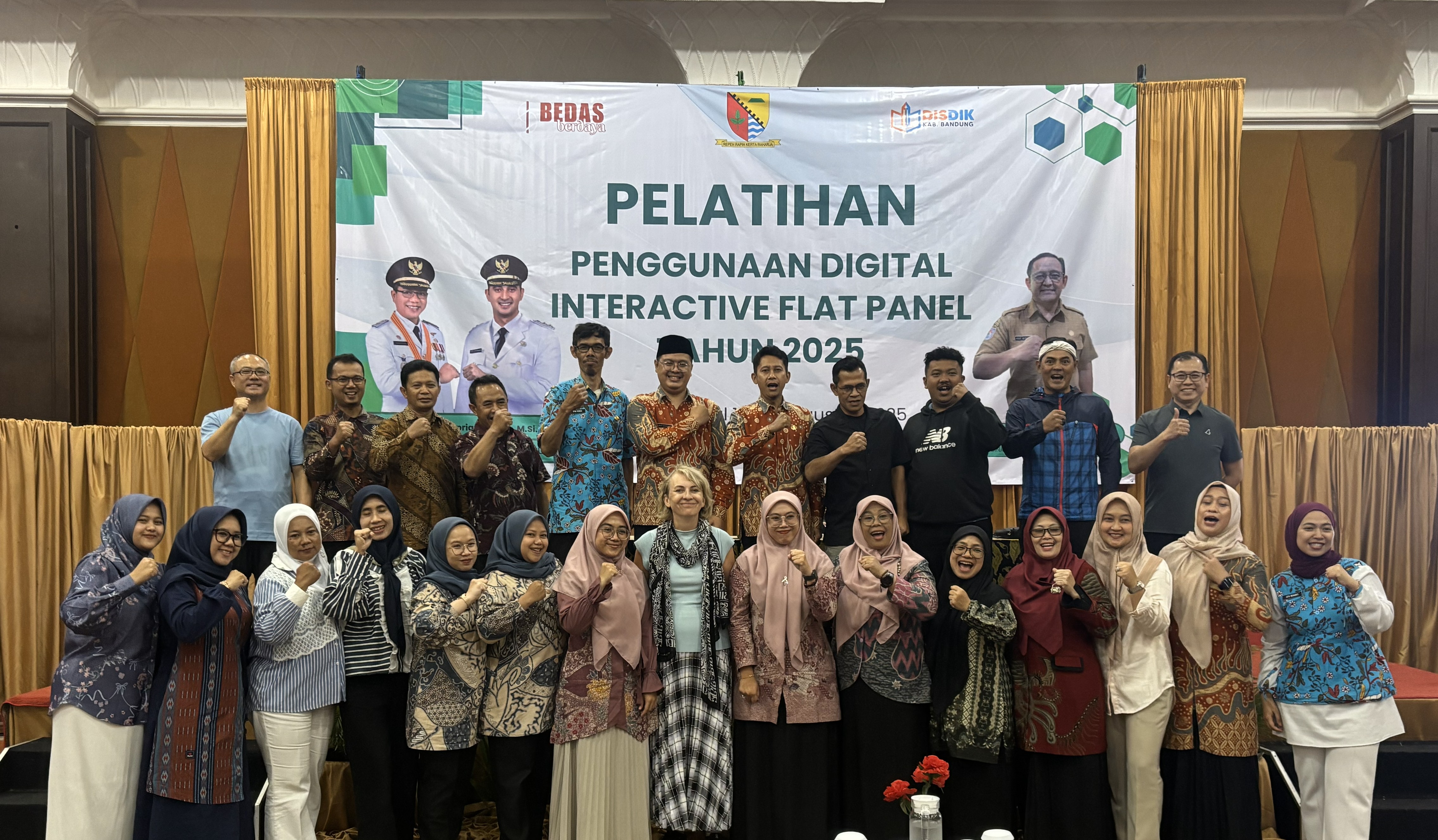
TT Lab partnered with Singapore EdTech company Radica to deliver an interactive teaching and technology training program for 37 schools in the Bandung region in August 2025. Over 100 teachers and school leaders took part in hands-on sessions that combined digital tools with active learning strategies, focusing on practical classroom application.
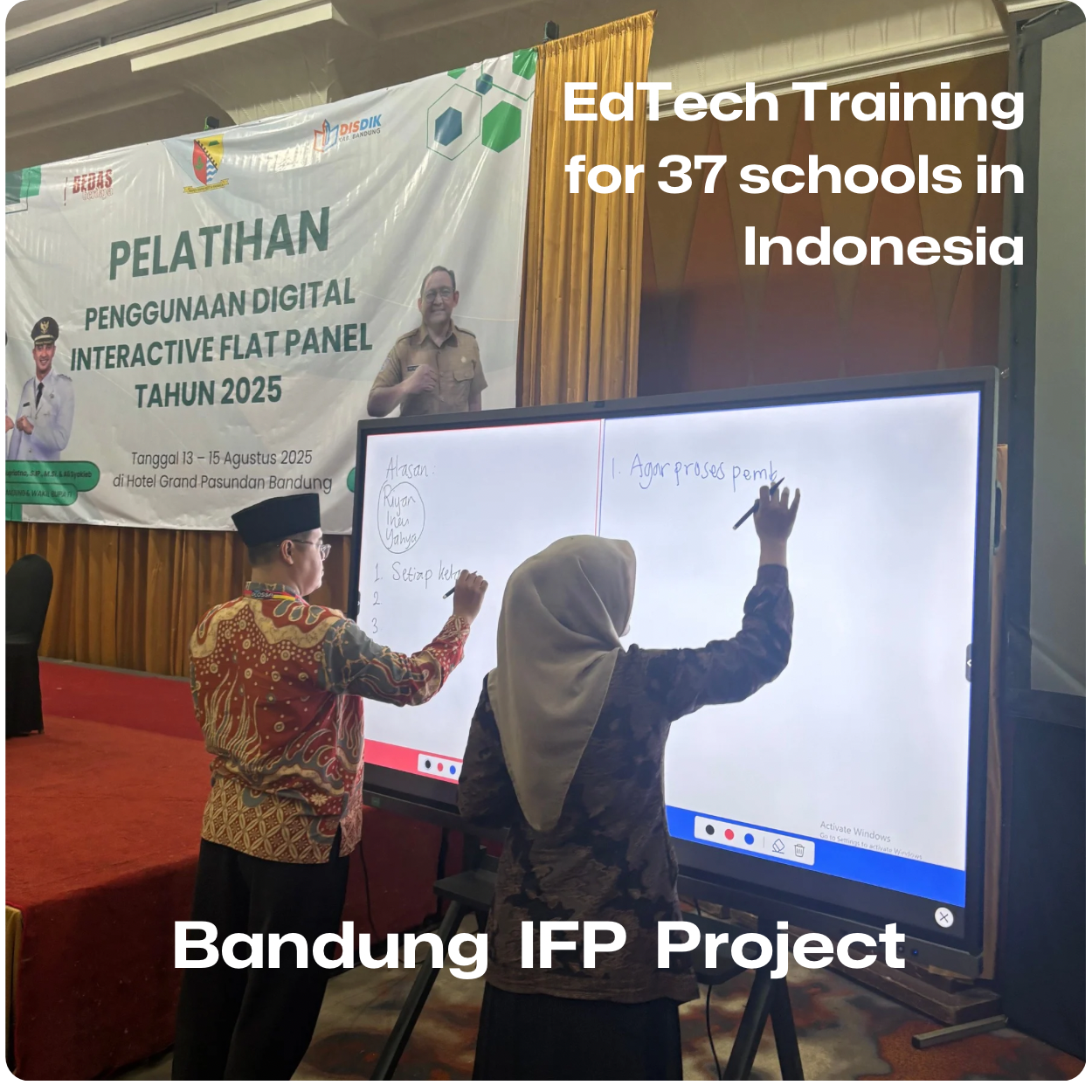
Project overview
EdTech Consultancy & Training
Interactive Technology Teacher Training for Central Asia Education Solutions, Kazakhstan
To support Central Asia Education Solutions (CAES) in their project to integrate interactive technology into schools, TT Lab consultants developed a comprehensive training program focused on the pedagogical use of interactive tools. This initiative resulted in the training of 400 teachers across 10 secondary schools in Kazakhstan, empowering educators to harness interactive technology effectively in their classrooms.
CAES is an integrator and distributor of equipment for educational institutions in Central Asia, specializing in supplying innovative equipment and creating modern educational environments.
Project challenge
The Challenge
Indonesia is a vast and diverse archipelago of over 250 million people, 1,300 ethnic groups, 700 spoken languages, and 17,000 islands. This scale and diversity creates profound educational challenges, especially when it comes to ensuring equitable access to quality teaching and learning.
To advance equity and raise the quality of instruction nationally, the Ministry of Education has invested in digital platforms. Today, most of the 3.8 million Indonesian teachers across the country actively use the Ministry’s digital ecosystem, and digital resources have increasingly become part of everyday teaching. With the transition to digital resources, screens in class should no longer be just displays but interactive tools that allow students to engage, collaborate, and participate in learning.
As interactive flat panels (IFPs) enter classrooms, often from different manufacturers, teachers face a steep learning curve. While the brands may vary, the pedagogical principles for effective technology integration remain universal: strategies that support active learning, features that enhance engagement, and software to design meaningful digital lessons. Among these solutions is the software by Radica, a platform that supports lesson preparation and delivery through diverse and accessible tools.
Embedding new instructional practices at scale is a challenge as teachers are already overloaded, digital literacy varies widely, and infrastructure is uneven between urban and rural schools. Professional development must therefore be rapid, practical, and motivating, and designed to build confidence, spark experimentation, and strengthen community.
In August 2025, the Bandung Education Department organised a three-day conference and training programme to address these needs. Radica and TT Lab were pleased to contribute to this inspiring initiative, working alongside a dynamic community of teachers and school leaders committed to elevating learning through technology.
Project journey
The Journey
This project was focused on the use of interactive flat panels, with 100 teachers and school heads from 37 schools. It was delivered through a partnership between TT Lab and Radica, centred on a shared vision for EdTech training: building teachers’ pedagogical competencies, not simply their operational skills with technology.
Shared mission
Our collaboration was grounded in three core commitments:
- Support educators in a rapidly changing technological landscape.
- Equip teachers with practical strategies and techniques, informed by educational theory, innovation management, and a genuine understanding of teachers’ realities.
- Enable confident decision-making about digital tools, ensuring technology is used in ways that genuinely benefit student learning and future readiness.
From the outset, we knew the training needed to move at speed. The nationwide shift to interactive classrooms demanded an accelerated approach and one that helped teachers rapidly acquire the competencies required to use Interactive Flat Panels (IFPs) as purposeful learning tools.
A Co-Training Approach
The programme was co-delivered by TT Lab and Radica trainers - Inna Stevens and Colin Li, working as a team. Effective co-training requires a shared vision, common language, and aligned methodology. We anchored our work in the principles of active learning, not only “learning by doing,” but structured experimentation that supports innovation in teaching practice. Teachers were encouraged to reflect and engage in professional dialogue with their colleagues.
Learning Pathway
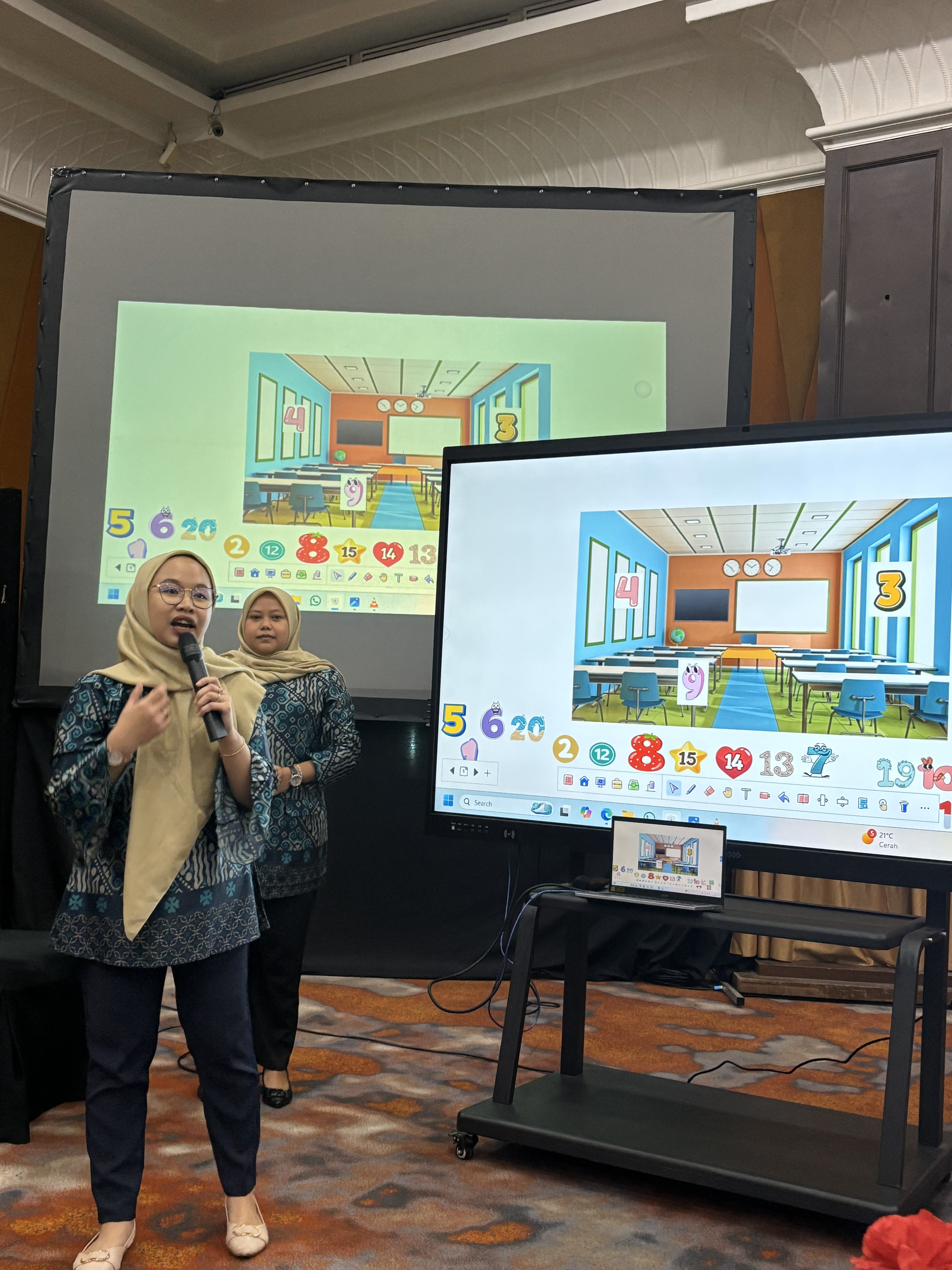
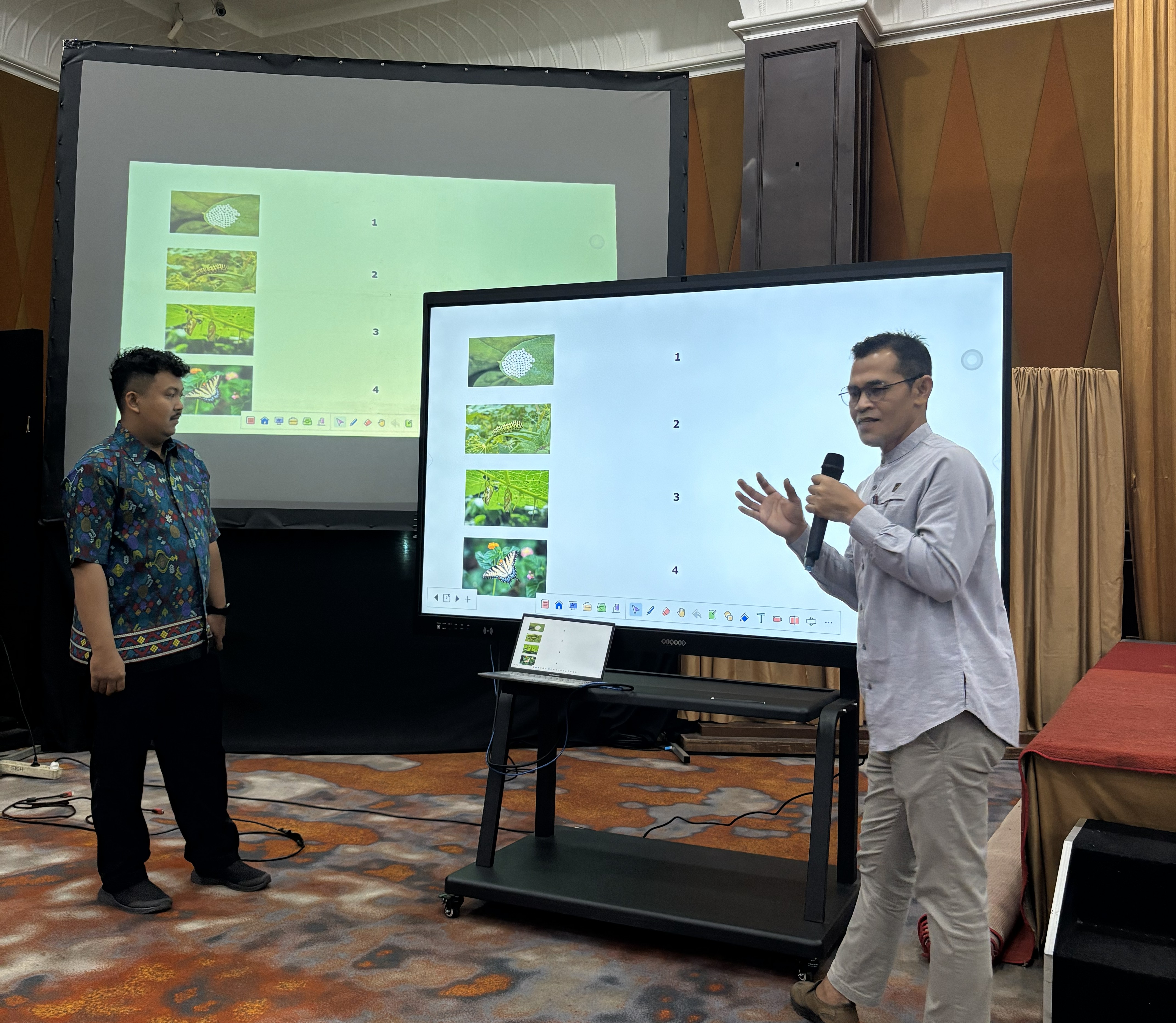
We began by helping teachers translate familiar paper-based activities into digital formats. This gave them a clear understanding of the features, tools, and resources available on their IFPs.
Through discussion and reflection, teachers explored the dual roles they play in a digital classroom:
- Teacher as Curator, selecting and adapting digital resources with intention.
- Teacher as Creator, designing new digital learning materials when needed.
We examined the competencies required for both roles and how educators can move fluidly between them during the teaching process.
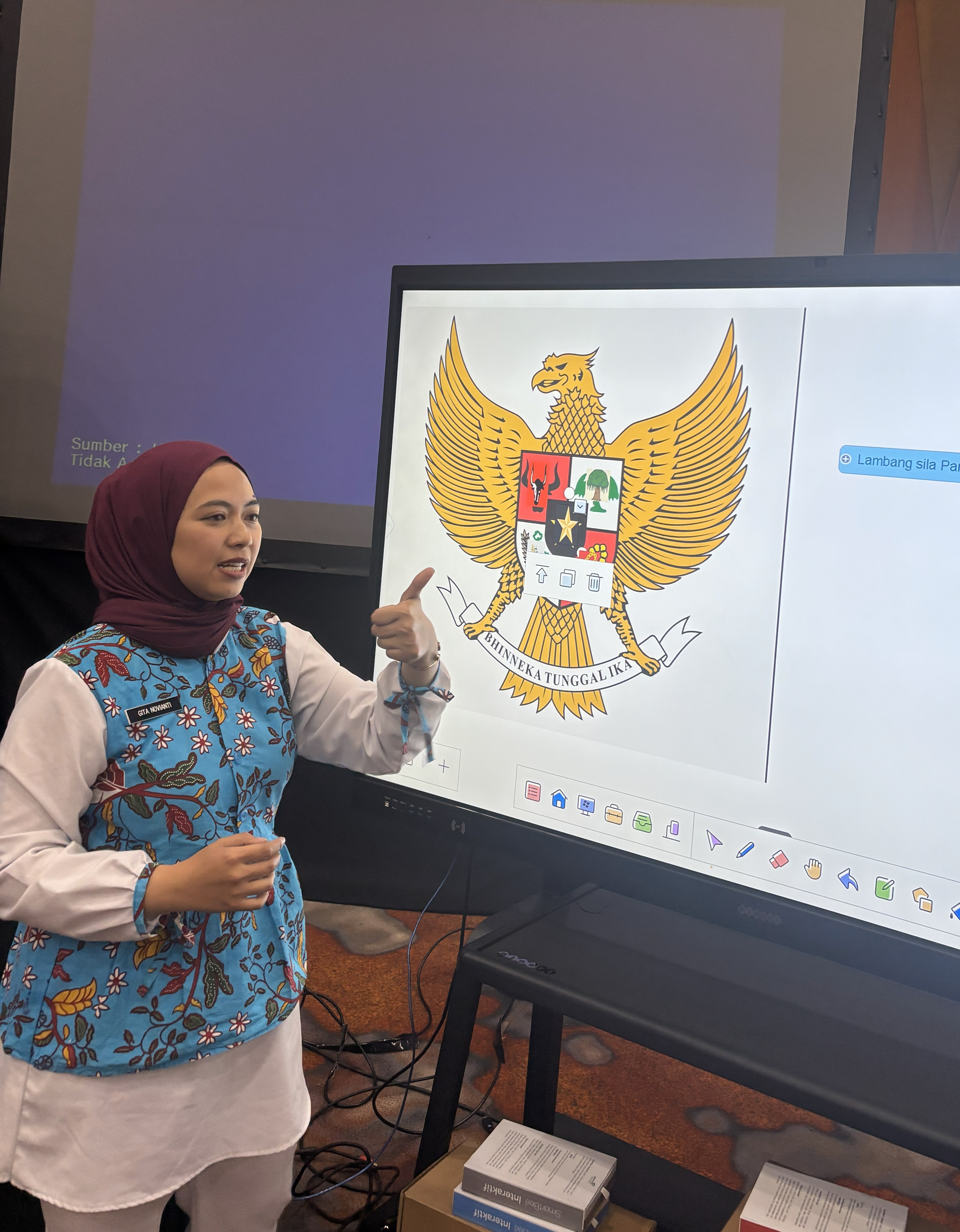
On the final day, school teams presented their own IFP-based learning resources. These showcased:
- learner-centred design
- a willingness to experiment
- creative approaches to digital pedagogy
Working as school teams reinforced a shared understanding of what interactive, student-focused teaching looks like in their local contexts.
Project outcomes
The Outcome
The programme delivered a transformative learning experience for 100 school leaders and teachers from 37 schools, equipping them with the confidence and competencies needed to use Interactive Flat Panels (IFPs) and digital teaching tools effectively. Many participants have since become internal champions, ready to cascade their learning to colleagues across their school communities.
Feedback reflected both professional growth and renewed motivation:
“I am excited to implement this at school soon; now I understand so many of the tools.”
“My main achievement is being braver to invite students to interact using technology. I can now create interactive materials - games, and worksheets - that let students work on the IFP directly.”
These reflections highlight a shift from using IFPs as display screens to designing student-centred learning experiences with the help of interactive technology.
We can identify three emerging areas of change:
- Communication Hub
IFPs are becoming central touchpoints for whole-class dialogue, collaborative work, and shared visibility of ideas.
- Student Engagement
Teachers are designing more interactive tasks, inviting students to contribute, interact with content, and visibly co-construct learning.
- Teacher Workflow
Digital lesson planning is becoming more efficient, freeing up more time for learner support.
We are proud to have delivered this training during a critical period of national digital transformation. Just three months after the Bandung programme, on 17 November 2025, Indonesia officially launched a nationwide initiative to deploy Interactive Flat Panels in public schools, as part of its vision of “Digitalisation for a Smart Indonesia.”
Our work ensured that a cohort of educators in Bandung entered this shift prepared, confident, and open to innovation, moving beyond the use of the device itself to focus on learning, agency, and long-term student outcomes.
Project gallery
Looking Ahead
As IFP deployment continues across Indonesia, the next frontier will be sustaining professional communities, deepening pedagogical confidence, and investing in ongoing experimentation. TT Lab and Radica’s shared approach, grounded in evidence, practice, and teacher voice, offers a scalable model for accelerating meaningful technology adoption in schools.